
Learning the Discipline: My Early Struggles with Bharatanatyam
Sometimes the hardest lessons come before the first dance step is even learned.
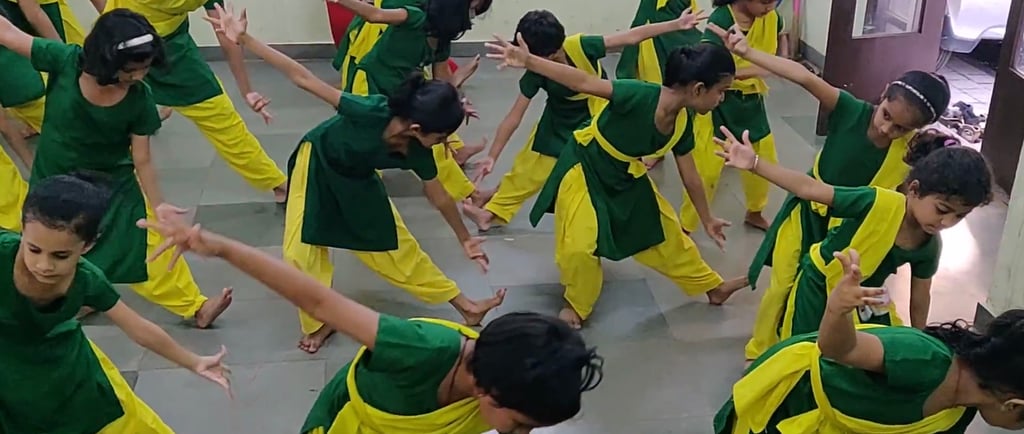
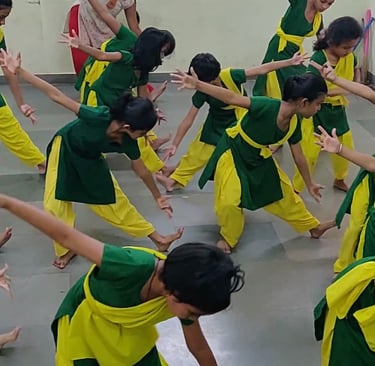
In my first post, I shared how I was introduced to Bharatanatyam, how that magical first classroom sparked a lifelong passion. But as a child, I thought dance would be easy. Oh, how wrong I was! Before we could even start our beloved “tai ya tai,” we were made to do PT exercises, basic warm-ups that I found very boring. I would wait eagerly for the dance part, only to find that in the first few months, our teacher made us do more exercises and less dancing. And then came aaramandi, the half-sitting posture—my legs would ache, I would get tired, and I would come home complaining to my mom: “Why does she make us repeat the same things every class? Why don’t we learn something new?”
Mymom’s words stayed with me: “Unless you do the first step right, how can she teach you the next one? You have to learn and practice properly to move ahead.” At the time, it felt strict, but now I realize that Bharatanatyam training is not just about teacher and child—it’s a trio: teacher, child, and parent. Patience, guidance, and support must come from all three, and that early foundation shapes how a dancer grows
One day, my legs hurt so much that I refused to go to class. My strict mother pushed me anyway. That day, the teacher allowed me to sit and observe instead of dancing. I happily sat beside her, thinking it would be easy. But as the class progressed, I noticed something important: many of my friends were doing even the exercises wrong, and the teacher was patiently correcting them. Before I knew it, I stood up and joined the class, trying to follow the steps correctly. That observation was a turning point. I finally understood why repetition was necessary and how each exercise shaped our body, mind, and discipline.
Small children are indeed like soft clay, ready to be molded into something beautiful. I was lucky to have good guidance, considering the limited resources my family had at that time. But my mom started wondering: Was she really under proper training? Did mydaughter’s talent need a better opportunity to grow? How would she find better guidance when classical dance had almost no presence in our community and our family had no background in it?
In my next post, I’ll share how we found a better training environment, how my dance evolved, and the steps I took to deepen my practice despite these challenges. The journey was just beginning—and the real lessons were yet to come.
-Kalpita Rane